If you’ve been brewing for a year or so and you’re still reaching for ingredient kits — the pre-assembled boxes of malt extract, hops, and yeast that take a lot of the guesswork out of recipe design — you’re in good company. An extract ingredient kit bundles everything a recipe needs to make a 5-gallon batch (roughly 48 twelve-ounce bottles) of a specific beer style. Malt extract is concentrated, pre-processed barley sugars that dissolve into hot water; you skip the all-grain mashing step and get to the fun part faster. These kits sit at the intersection of convenience and quality: faster brew days, fewer equipment hurdles, and still excellent beer. The two names you’ll encounter most often at the mid-tier price point — roughly $35–$60 per kit — are Brewer’s Best (manufactured and distributed by LD Carlson Company) and Craft A Brew (from Craft A Brew LLC). This article does a side-by-side analysis of both brands across the factors that actually move the needle: ingredient quality, kit completeness, style range, and total value per batch.
What’s Actually in Each Box (and Why It Matters)
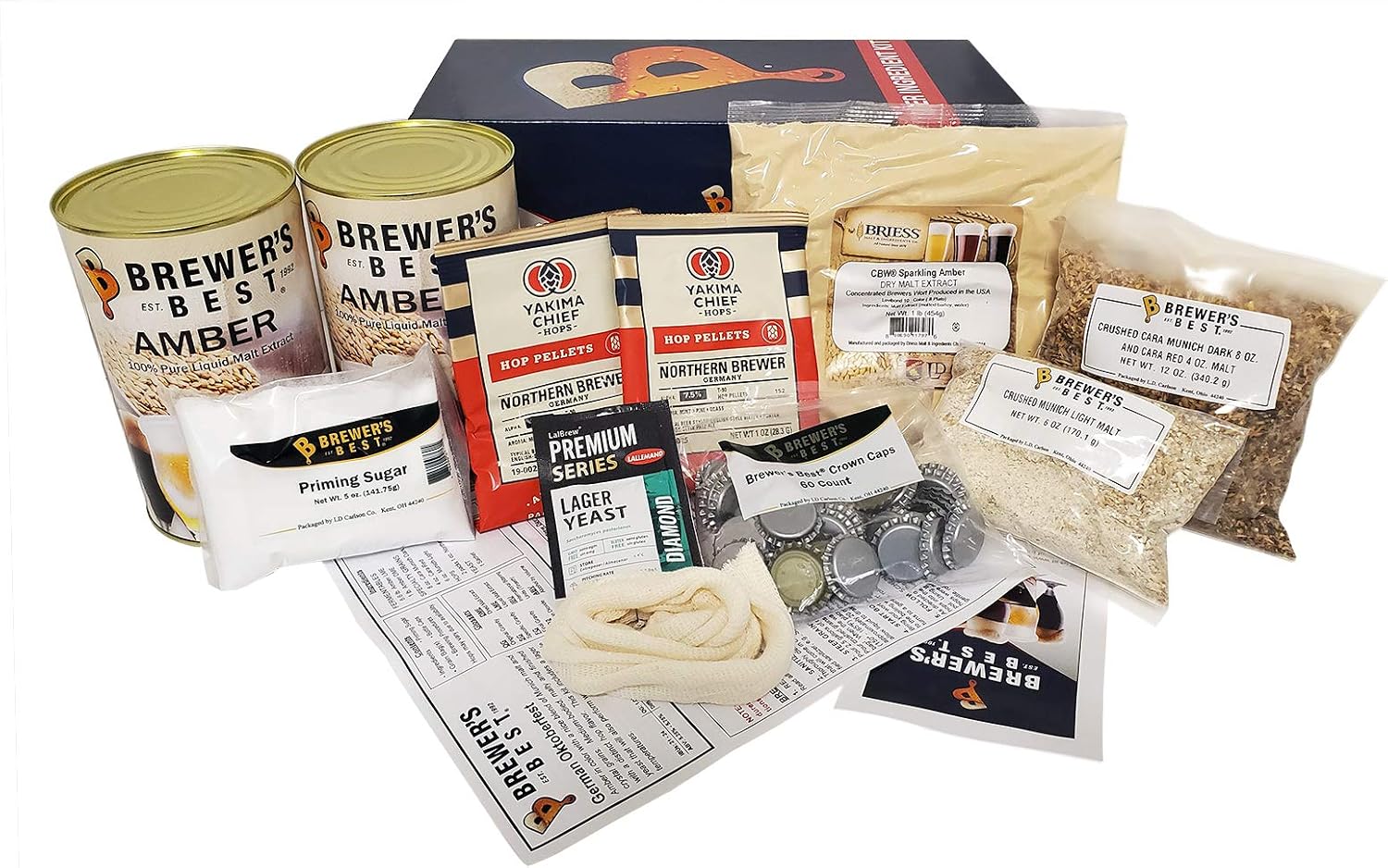
Before comparing brands, it helps to know the anatomy of a standard extract kit. Every reputable 5-gallon kit should include:
- Malt extract — either liquid (LME) or dry (DME), or a combination
- Specialty grains — small amounts of roasted or crystal malt for steeping (no mashing required), adding color, flavor complexity, and body
- Hops — typically in pellet form, for bitterness and aroma
- Yeast — dry or liquid, style-matched
- Priming sugar — for carbonation at bottling
- Recipe sheet — ideally with troubleshooting notes
Brewer’s Best kits, distributed through LD Carlson and widely stocked at homebrew retailers, follow a consistent format: they ship with a combination of LME and specialty grains, hop pellets in measured quantities, a dry yeast packet, and corn sugar for priming. Published specification sheets from LD Carlson confirm that most Brewer’s Best kits target an original gravity (OG — the sugar density of your wort before fermentation, which predicts alcohol content) in the 1.040–1.070 range, covering styles from American Wheat and Pale Ale up through Imperial Stout.
Craft A Brew kits lean slightly differently. Their core lineup uses DME as the base for many kits, with LME appearing in select styles. Craft A Brew packaging is retail-polished — gift-adjacent boxes with illustrated labels — and the recipe instructions are written accessibly for first-time brewers. The ingredient quantities are calibrated to a 5-gallon target (some kits scale to 1-gallon), and several styles include specialty adjuncts — honey, specialty syrups — that Brewer’s Best reserves for add-on ingredient bundles rather than including in the base kit.
The bottom line on contents: Both brands hit the standard kit anatomy. The difference is in defaults: Brewer’s Best defaults to LME plus specialty grain steeping; Craft A Brew mixes DME and LME more liberally and packages for shelf appeal. Neither approach is a dealbreaker, but it shapes your brew day.
Ingredient Quality and Freshness
This is the comparison that matters most if you care about what’s actually in the glass.
Malt Extract: Freshness Is the Variable That Matters Most
Malt extract freshness is the single biggest quality variable in extract brewing. Brulosophy’s exbeeriment series on extract freshness — published at brulosophy.com — documents that older or improperly stored LME develops a stale, “worty” flavor compound typically described as a dark, slightly oxidized sweetness that survives fermentation and shows up in the finished beer. Brew Your Own Magazine’s extract brewing guides, available at byo.com, consistently recommend buying from retailers with high turnover and checking production dates where visible.
Brewer’s Best has the advantage of distribution scale. Because LD Carlson supplies a large portion of the independent homebrew retail channel, their extract typically moves faster through distribution, which correlates with fresher product on the shelf. Aggregated owner feedback across long-run reviews tends to note that Brewer’s Best extract arrives in good condition and that the specialty grains are consistent — recognizable color and aroma when you open the bag.
Craft A Brew sources quality ingredients, but their retail footprint skews toward gift shops, kitchen stores, and online-direct channels that may have slower turnover than a dedicated homebrew shop. When kits arrive fresh — especially online-direct from Craft A Brew’s own storefront — results are very good. The concern is shelf life at non-homebrew retail: a kit sitting in a kitchenware store for six months is a different proposition than one pulled from a dedicated homebrew shop’s cold stockroom.
Brewer's
$44.95
In stock on Amazon
Check price on AmazonHops: Both Brands Use Sealed Pellets, with Similar Caveats
Both Brewer’s Best and Craft A Brew use pellet hops sealed in oxygen-barrier packaging. Published kit documentation from both brands does not specify harvest year on consumer-facing materials, which is standard for the category. If hop aroma matters to you — particularly for IPAs or American Pale Ales — this is an argument for buying any kit from a high-turnover retailer or supplementing with fresh hop additions from a bulk supplier. Brew Your Own Magazine’s extract brewing guides specifically recommend this approach for brewers who want to push hop character in an extract IPA, noting that supplementing kit hops with fresh late-addition pellets is one of the highest-return moves an extract brewer can make.
Brewer's
$44.95
In stock on Amazon
Check price on AmazonYeast: Both Brands Default to Dry, and That’s the Right Call
Brewer’s Best kits universally ship with dry yeast. Craft A Brew similarly defaults to dry yeast in most kits. Dry yeast has a longer shelf life than liquid yeast and handles shipping better — this is an unambiguous advantage over kits that include liquid yeast packs without cold-chain guarantees. MoreBeer’s guide on malt extract and ingredient freshness, published at morebeer.com/content, notes that dry yeast viability holds well at room temperature for 12–18 months, making it a reliable inclusion in a mail-order or shelf-stored kit. Neither brand loses points here; both made the right call.
Brewer's
$44.95
In stock on Amazon
Check price on AmazonStyle Range and Kit Breadth
Brewer’s Best: Depth Across More Than 40 Styles
Brewer’s Best has a significantly wider catalog — covering everything from American Amber Ale and Hefeweizen to niche styles like Pumpkin Ale (with adjunct spice pack included), Robust Porter, Witbier, and Scottish Ale. For an intermediate brewer who wants to work through a variety of styles in a single extract season, this breadth is a genuine advantage. The Homebrewers Association’s homebrewing basics documentation, published at homebrewersassociation.org, notes that style diversity in kit form is particularly useful for brewers who are still mapping their palate preferences before committing to all-grain recipes. If you’ve already brewed the beginner standards and you want to push into less common territory, Brewer’s Best is almost certainly going to have the kit you want.
Brewer's
$44.95
In stock on Amazon
Check price on AmazonCraft A Brew: Curated Rather Than Comprehensive
Craft A Brew’s narrower catalog — approximately 15–20 styles — is more curated than limited. Their core offerings (IPA, Hefeweizen, Honey Ale, Stout) are executed with care, and the packaging quality makes them a credible gift item for an enthusiast or a newer brewer. The trade-off is straightforward: if you’ve already brewed the core styles and want to explore a Witbier, a Saison, or a Scottish Ale, Craft A Brew may simply not have the kit. That’s not a quality failure — it’s a catalog decision — but it matters for your planning.
Brewer's
$44.95
In stock on Amazon
Check price on AmazonSide-by-Side Summary
| Feature | Brewer’s Best | Craft A Brew |
|---|---|---|
| Approximate kit count (2026) | 40+ styles | 15–20 styles |
| Price range (5-gal) | $38–$58 | $40–$62 |
| Malt extract default | Primarily LME | Mixed LME/DME |
| Yeast format | Dry | Dry |
| Packaging style | Functional/utilitarian | Retail/gift-oriented |
| Recipe instruction depth | Technical, with OG targets | Accessible, beginner-friendly |
| Best retail channel | Dedicated homebrew shops | Gift shops, online-direct |
Brewer's
$44.95
In stock on Amazon
Check price on AmazonCost Per Batch and Total Value
At the $38–$62 price point for a 5-gallon kit producing roughly 48 bottles of finished beer, both brands land at approximately $0.80–$1.30 per bottle in ingredient cost alone — not accounting for water, energy, or equipment depreciation. That’s a compelling number regardless of which brand you choose.
The honest value comparison:
Brewer’s Best kits typically include everything you need, including priming sugar and a recipe card with technical notes — OG targets, fermentation temperature ranges, and style context that helps you understand what you’re brewing and why. Long-run owner feedback consistently describes them as “complete,” meaning you don’t find yourself scrambling for a missing component mid-brew day. The lower per-kit price at homebrew retail (typically $3–$8 cheaper than Craft A Brew’s direct pricing for comparable kit sizes) makes the math straightforward for pure cost-per-batch efficiency.
Craft A Brew kits are similarly complete but occasionally receive feedback that the recipe instructions, while accessible, are optimized for first-time brewers and can feel thin on technical detail for someone who already has 10 or more batches under their belt. The packaging investment is real — these are kits that look good under a Christmas tree or on a kitchen shelf — but that comes with a slight price premium relative to the ingredient volume.
The Decision Framework: Which Kit Is Right for Your Situation
If you care about style variety and want to work through a rotation of different beer types this year: Go Brewer’s Best. The 40+ style catalog means you won’t exhaust the options quickly, and the distribution footprint means a good homebrew shop near you almost certainly has them in stock and fresh.
If you’re shopping for a gift or want kits that look good on a kitchen shelf: Craft A Brew wins the packaging comparison clearly. The retail-grade box design and accessible instructions lower the intimidation factor for the recipient, and the ingredient quality is solid when purchased from a high-turnover source.
If hop freshness and aroma expression matter to you — especially for IPAs: Neither brand’s kit hops will fully satisfy a brewer who prioritizes fresh hop character. Buy either kit for the malt and yeast, then supplement with fresh pellet hops from a dedicated homebrew supplier. As Brew Your Own Magazine’s extract brewing guides at byo.com recommend, adding a late hop charge of fresh pellets is one of the most effective upgrades an extract brewer can make.
If you’re on a tighter per-batch budget: Brewer’s Best tends to run $3–$8 cheaper per kit at homebrew retail compared to Craft A Brew’s direct pricing, with comparable ingredient volume. The math favors Brewer’s Best for pure cost-per-batch efficiency.
If you’re using extract kits as a stepping stone toward all-grain: Either brand works well. The skills you’re building — water management, temperature control, fermentation monitoring — transfer directly. Brewer’s Best’s recipe sheets tend to include more technical annotation, giving you more data points to track as you build brewing intuition before the jump to all-grain. The Homebrewers Association’s homebrewing basics documentation at homebrewersassociation.org makes the case that extract brewing is a genuine learning environment, not a shortcut — and the technical feedback loop you get from tracking OG and fermentation temperature on a Brewer’s Best kit is part of that education.
The bottom line: both brands make genuinely good extract kits for the price. Brewer’s Best earns the nod as the default choice for a serious intermediate brewer buying for themselves — wider style selection, better distribution freshness, lower price, and more technical recipe documentation. Craft A Brew earns it for the gift context and the newer brewer who values approachability and polished presentation. Neither is a wrong answer. The freshness of the specific kit you buy, and the care you put into your brew day, will matter more than the brand name on the box.