If you’ve ever made oatmeal, you already understand the basic problem that brew-in-a-bag (BIAB) solves. When you make all-grain beer, you steep a large amount of cracked grain (the “malt bill”) in hot water to extract fermentable sugars — essentially making a very intentional grain porridge. The challenge is separating the liquid wort (the sugar-rich water that becomes beer) from all that spent grain. Traditional brewing systems use a dedicated vessel called a mash tun with a built-in false bottom or manifold to do this. BIAB cuts all that hardware out: you drop your grain into a fine mesh bag suspended inside your kettle, steep it, then lift the bag out. Simple, space-efficient, and surprisingly capable — which is why it’s become one of the dominant methods for homebrewers from first-batch beginners through serious all-grain veterans. But the bag itself? That’s where BIAB quietly lives or dies. The wrong mesh size, a bag that doesn’t fit your kettle, or material that shreds on the second batch will cost you efficiency, wasted grain, and frustration. This guide breaks down exactly what to look for — and which bag tier fits your setup.
| EDITOR'S PICK[Hop Spider 300 Micron Mesh Stai…](https://www.amazon.com/dp/B072Q1G91R?tag=greenflower20-20) | Mid-tier[Brew Bags Reusable 3 Pack](https://www.amazon.com/dp/B0F21YKTP6?tag=greenflower20-20) | Budget pick2 Pack 26"×22" Brew Bag Reusabl… | |
|---|---|---|---|
| Material | Stainless Steel | — | Nylon |
| Bag Size | — | 26"x22" | 26"×22" |
| Mesh Micron | 300 | — | — |
| Max Weight | — | — | 20 Lbs |
| Price | $28.99 | $11.99 | $6.98 |
| See on Amazon → | See on Amazon → | See on Amazon → |
Why the Mesh Micron Rating Actually Matters
The micron rating of a brew bag describes the size of the holes in the mesh fabric — smaller numbers mean finer filtration. For brewing purposes, most bags fall between 100 and 400 microns, and where you land on that range has real downstream consequences for your beer.
A finer mesh (closer to 100–150 microns) catches more grain particles, resulting in clearer wort going into fermentation and, generally, less trub (the sediment of grain solids and proteins that settles at the bottom of your fermenter). Clearer wort can mean cleaner fermentation character, which matters especially for lagers, hazy IPAs where hop biotransformation is the goal rather than grain haze, and any recipe where you want the yeast to do its job without competing solids.
A coarser mesh (250–400 microns) allows more grain fines through, which sounds like a downside but isn’t always. Those fines carry fermentable material, and some brewers report marginally better efficiency — more sugar extraction — with looser mesh. As documented in Brulosophy’s BIAB mash efficiency experiments (published at brulosophy.com), squeeze pressure and mesh fineness interact in meaningful ways: a coarser bag squeezed firmly can outperform a fine bag that clogs and restricts drainage.
The practical sweet spot for most all-grain homebrewers is 150–200 microns. Fine enough to hold back the bulk of grain solids, coarse enough to drain freely when you lift the bag. Where you drift from that center point depends on your style focus and whether you’re squeezing the bag.
Bag Sizing: Fit Your Kettle, Not the Other Way Around
Bag sizing is where most first-time BIAB buyers make the most correctable mistake: they buy a bag sized to the nominal volume of their kettle without accounting for how a bag actually sits inside it.
A bag sized exactly to your kettle’s interior will flatten against the bottom and sides, restricting drainage and creating hot spots if you’re heating through the kettle wall or element. You want the bag to hang with a few inches of clearance on all sides, forming a basket shape rather than a liner shape. As a general rule:
- Diameter: The bag’s open circumference should be 2–4 inches wider than your kettle’s interior diameter.
- Depth: The bag bottom should sit 3–5 inches above your kettle floor when the bag is loaded and hanging from the rim or a pulley.
For popular kettle sizes, that translates roughly as follows:
| Kettle Volume | Kettle Diameter (approx.) | Recommended Bag Opening |
|---|---|---|
| 5–7.5 gal | 11–13 in | 14–16 in |
| 10 gal | 14–15 in | 17–18 in |
| 15 gal | 16–17 in | 19–21 in |
MoreBeer’s BIAB Equipment Guide (morebeer.com/content) specifically flags oversizing as more forgivable than undersizing — a bag with a little extra material folds neatly at the rim, while an undersized bag restricts drainage and risks overflow when grain expands during the mash.
If you’re brewing on an electric all-in-one system — a Grainfather G40, Anvil Foundry 10.5, or similar — check whether the manufacturer sells a purpose-fitted bag for that vessel. These systems have non-standard basket geometries, and a generic bag that doesn’t seat cleanly against the basket walls defeats the filtration. The manufacturer-specific bag is worth the premium for all-in-one users.
Material and Construction: Where Bags Actually Fail
Mesh micron rating gets the most airtime in forums, but construction quality is where bags diverge most sharply in real-world longevity. The two dominant materials are polyester mesh and nylon mesh, and they behave differently under brewing conditions.
Polyester mesh is dimensionally stable at mash temperatures (145–160°F / 63–71°C), holds its micron rating under repeated mechanical stress (squeezing, lifting a loaded bag), and is generally easier to clean. The mesh doesn’t distort over multiple batches, which means the filtration performance you get on batch one remains close to what you get on batch twenty.
Nylon mesh is softer, which some brewers prefer for the squeeze-and-wring technique — the fabric compresses more uniformly. However, nylon can relax and stretch over time at repeated mash temperatures, gradually coarsening the effective micron rating. The Brewing Network’s community discussion series on BIAB bag selection (thebrewingnetwork.com) frequently identifies nylon elongation as a long-term durability concern for brewers doing 20 or more batches per year.
Beyond material, look at these construction details:
Seam type. Bags with flat-felled or French seams (where the raw edge is folded under before stitching) dramatically outlast bags with simple overlocked edges. The seam is the first failure point on a loaded bag — you’re lifting 8–15 lbs of wet grain — and overlocked seams on thin polyester pull through within a season of regular use.
Drawstring and closure. A proper drawstring is functional gear, not a convenience feature. When lifting a loaded bag, if the bag isn’t cinched tight, grain can shift and partially exit under the rim of the kettle. Look for bags with a reinforced channel and a cord thick enough to grip with wet hands.
Handle loops. Some bags include sewn webbing handles in addition to the drawstring. If you’re lifting a full grain load by hand rather than using a pulley system, handles distribute weight across your palm rather than concentrating it on fingertips gripping cord — a meaningful ergonomic difference after a long brew day.
Comparing Bag Tiers: Budget, Mid-Range, and Premium
The BIAB bag market splits cleanly into three tiers that reflect both material quality and construction method. Understanding where each tier earns its price — and where it cuts corners — saves you from replacing a cheap bag after ten batches or overspending on features you won’t use.
Budget Bags: Entry-Level Nylon, Overlocked Seams
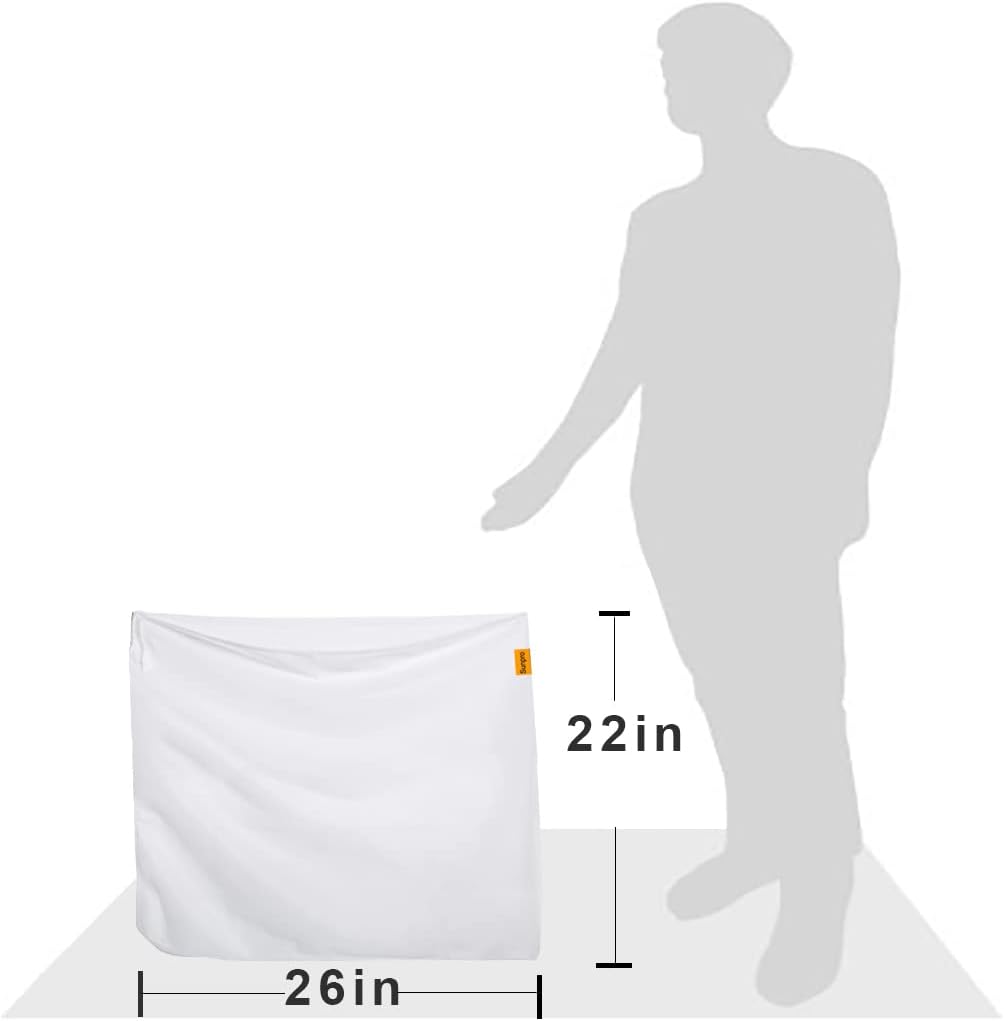
2
$6.98
In stock on Amazon
Check price on AmazonEntry-level bags typically use thinner nylon mesh in the 200–300 micron range with overlocked (serged) seam construction. They cost $8–$18 and are widely available through homebrew retailers. For a brewer doing 6–12 batches per year on a 5-gallon kettle system and using a no-squeeze, gravity-drain method, a budget bag can deliver a full season of reliable service.
Where budget bags fail is under mechanical stress. Aggressive squeeze technique — the kind Brulosophy’s efficiency experiments at brulosophy.com show can yield a 3–8% efficiency gain — will stress overlocked seams enough to cause separation within 10–20 batches. Nylon mesh at this price point also tends to drift coarser over repeated heat cycles. If you plan to squeeze firmly or brew frequently, budget bags become a false economy.
Byo.com’s BIAB technique coverage notes that newer all-grain brewers often start with budget bags and upgrade after their first seam failure — which is a reasonable path, but going in with eyes open about the lifespan expectation saves frustration.
2
$6.98
In stock on Amazon
Check price on AmazonMid-Range Bags: Polyester Mesh, Reinforced Seams

Brew
$11.99
In stock on Amazon
Check price on AmazonMid-range bags ($20–$40) represent the sweet spot for the majority of serious homebrewers. Brands in this category — including The Brew Bag and BrewBag USA — publish their seam construction specs and typically use double-stitched flat-felled seams on dimensionally stable polyester mesh. Micron ratings are usually in the 150–200 range, which aligns with the general-purpose sweet spot discussed above.
Polyester mesh at this tier holds its filtration rating across 40–80 batches under regular use, based on aggregated owner feedback across the homebrew community. The reinforced drawstring channel on quality mid-range bags is thick enough to grip with wet hands and is sewn into a proper channel rather than a single loop stitch. For brewers on kettle-based BIAB setups who squeeze the bag moderately, this is the tier where construction quality meaningfully exceeds the additional cost over budget options.
The Homebrewers Association’s all-grain brewing methods overview (homebrewersassociation.org) positions BIAB as a legitimate primary brewing method — not a beginner shortcut — and the mid-range bag tier is what makes that positioning realistic for repeated, consistent results.
Brew
$11.99
In stock on Amazon
Check price on AmazonPremium Bags: Custom-Fit and Commercial-Grade Construction

Hop
$28.99
In stock on Amazon
Check price on AmazonPremium bags ($45–$80+) fall into two categories: custom-fitted bags for specific all-in-one systems (Grainfather, Anvil Foundry, Ss Brewtech), and heavy-duty woven polyester or stainless-reinforced bags designed for high-volume or near-commercial use.
Custom-fit bags for AIO systems are premium by necessity, not marketing. The grain basket geometry on a Grainfather G40 or Anvil Foundry 10.5 is specific enough that a generic bag draped inside the basket creates uneven drainage and grain bypass at the gap between the bag and basket wall. Manufacturer-specific bags or third-party bags cut to the verified basket OD solve that problem. For AIO brewers, this is the right tier regardless of batch frequency.
For brewers moving toward nano-brewery pilot batches, the Homebrewers Association’s commercial transition resources (homebrewersassociation.org) note that most licensing inspectors and co-packers flag consumable fabric filtration as a non-starter in commercial-adjacent environments. At that scale, stainless false-bottom inserts or commercial-grade woven stainless mesh bags rated for CIP sanitation replace fabric bags entirely — which is properly premium territory in both price and function.
For high-frequency home brewers (20+ batches per year) who aren’t going commercial, a heavy-duty polyester bag with webbing handles, flat-felled seams, and a reinforced rim is a legitimate long-term investment. Spend once, brew for years.
Hop
$28.99
In stock on Amazon
Check price on AmazonSqueezing: How Your Technique Changes the Bag You Need
The “to squeeze or not to squeeze” debate has been addressed thoroughly in BIAB-focused brewing literature. Byo.com’s BIAB technique coverage and Brulosophy’s documented efficiency experiments at brulosophy.com both address it directly. The short version: squeezing the bag after the mash raises wort extraction efficiency, sometimes meaningfully. The counterargument is that aggressive squeezing can extract tannins from grain husks, adding astringency. Most experienced BIAB brewers land on a moderate squeeze rather than a full wring.
What that means for bag selection: if you squeeze, you need a bag rated for mechanical stress. Polyester mesh with flat-felled seams and a reinforced drawstring is non-negotiable for squeeze-technique brewers. A thin nylon bag with overlocked seams will not survive aggressive squeeze technique across a full season.
If you’re running a pulley-and-colander setup — suspending the bag over the kettle and letting gravity drain it — you have more flexibility on construction. Finer mesh (150 microns or lower) works well because you’re not compressing and forcing drainage. But the bag still needs to handle the dead weight of a loaded, soaked grain bill, so seam quality remains relevant even without squeezing.
The Decision Framework: If X, Then Y
If you’re on a kettle-based BIAB setup and you squeeze the bag: Choose a mid-range polyester bag with flat-felled seams and 150–200 micron mesh. The Brew Bag and BrewBag USA are the brands most consistently cited for seam durability in this use case.
If you’re on a Grainfather, Anvil Foundry, or similar AIO with a grain basket: Start with the manufacturer-specific bag. If the OEM bag disappoints on mesh fineness, a third-party bag verified to match the basket OD is a reasonable upgrade — just confirm the diameter spec against the basket, not the outer kettle.
If you’re grain-draining without squeezing: You can move to 100–150 micron mesh without the clogging concern. Prioritize seam and handle construction over mesh fineness — the mechanical stress of a freely hanging loaded bag is still real.
If you’re buying as a gift for an all-grain brewer: Bundle the bag inquiry with the kettle spec. Bag sizing is so kettle-dependent that a standalone bag gift risks a mismatch. If you know the kettle, include that interior diameter on the order — the brewer will thank you for the correct fit far more than for any brand name.
A quality BIAB bag is a $25–$55 investment that directly affects every batch you brew. Getting the micron rating, construction, and sizing right is not gear obsession for its own sake — it’s the difference between pulling clean wort from a reliable, repeatable mash and troubleshooting efficiency problems that have nothing to do with your grain bill or water chemistry.